The Philosophy Behind the Work
Where did the philosophy behind Elevate Impact Advisory come from?
It is a question I have been asked many times, and for a long time I wasn't quite sure how to answer. The obvious response would have been to point to the schools I have worked in, the leadership positions I have held, my Master's in Educational Leadership and Change, my work with the International Baccalaureate, national curriculum projects, or the organisations I have had the privilege to support.
All of those experiences shaped the work. None of them explain where it truly began.
Looking back, I don't think this work began with a framework.
It began with a way of seeing.
It Began Before I Had Language
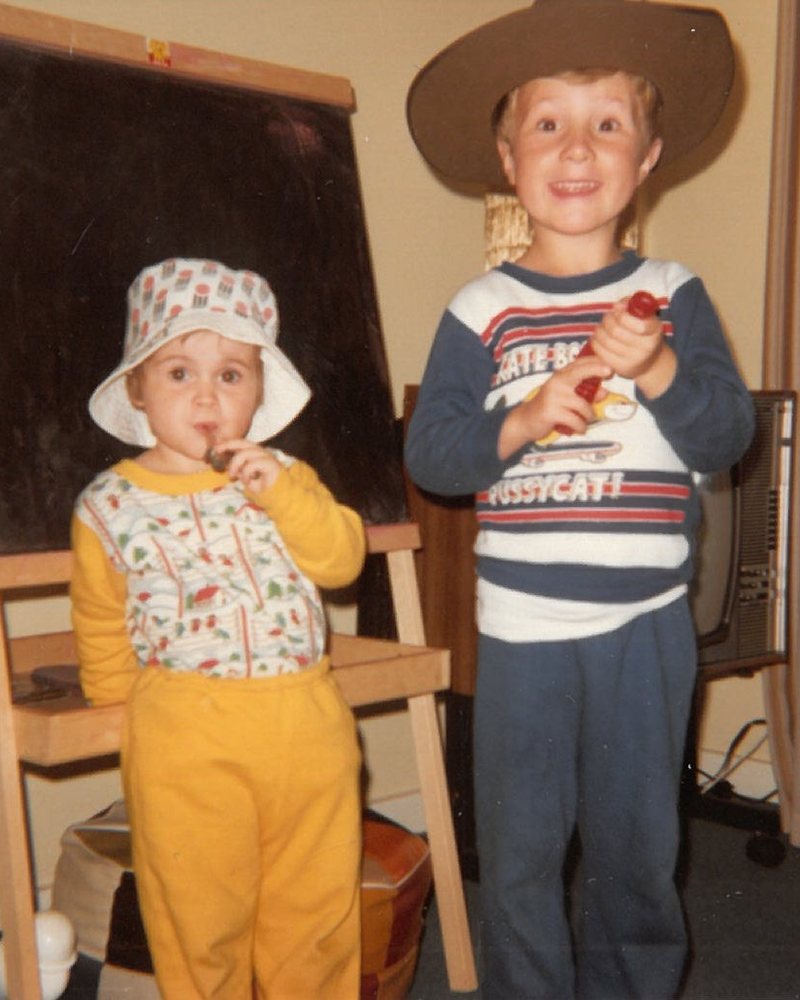
Some of my earliest memories are of playing schools. I can still picture the blue carpet in my childhood bedroom. My soft toys were carefully arranged in rows, my parents had bought me a little chalkboard, and I would spend hours teaching my imaginary class. There was always one child named David who somehow managed to find trouble, but even then, I wasn't really pretending to be a teacher.
I was imagining what learning could become.
As I grew older, I carried around what I proudly called my teacher basket. It was an old cane basket filled with picture books, paper and little treasures that I imagined would one day help children learn. Looking back, I don't think I was collecting teaching resources. I was collecting possibilities. Even then, I was fascinated by the invisible conditions that helped people flourish. I simply didn't have the language for them yet.
The First Teacher
I was fortunate enough to grow up watching someone very few people ever have the privilege to witness.
My mum.
Some teachers are remembered because they taught well. Others are remembered because, decades later, people still measure themselves against the belief those teachers had in them.
My mum was one of those rare people. Former students still find her—not simply because they remember what they learnt, but because they remember who they became. She saw something in people long before they could see it in themselves. She loved deeply, listened carefully, noticed what others missed, and held extraordinarily high expectations—not because she demanded perfection, but because she genuinely believed people were capable of becoming far more than they imagined for themselves.
She never settled for "fine." Neither did they.
Looking back, I realise Mum instinctively understood things I would spend decades trying to articulate. She understood that relationships were never separate from learning; they were the conditions that made learning possible. She understood that care and challenge were never competing ideas. Children rise in the presence of genuine belief.
She never spoke about theory. She simply lived it.
There is something I've never really admitted before.
Every now and then, I may have become just unwell enough to stay home from school. Not because I wanted a day off. Quite the opposite. My mum was teaching at another school and, if I recovered remarkably quickly, I could spend the day quietly sitting in the back of her classroom, watching.
Looking back, it probably wasn't my finest moral decision. But in my own mind, it was very important work.
I wanted to understand what she could see that I couldn't yet see. Years later, I realised I hadn't simply been watching someone teach. I had been watching someone create the conditions in which people believed they could flourish.
That lesson has never left me.
When Questions Became a Pursuit
Before university, I thought education was about finding answers. University quietly taught me something much more valuable.
Improvement begins with better questions.
Lecture after lecture, tutorial after tutorial, assignment after assignment, I found myself wondering less about how to complete the course and more about how I would redesign it. Not because it wasn't good, but because I couldn't stop asking a different question.
Were we preparing teachers to teach… or were we preparing the profession to improve?
That question never really left. Every role simply gave me another place to explore it.
Learning to See Organisations
My first teaching position sharpened that pursuit. I quickly realised that many schools measured what was easiest to see. Were lesson plans up to date? Had every book been marked? Did every page have a sticker and a positive affirmation?
Those things were visible. Learning often wasn't. Deep thinking wasn't. Collective growth certainly wasn't.
The issue wasn't the teachers. It was the invisible definition of success sitting quietly beneath the system. That became another pattern—one I would keep noticing throughout my career.
As my work expanded, so did the field of observation. The classrooms became schools. The schools became communities. The communities became systems. Working alongside families and communities taught me that schools never improve in isolation. Children don't leave their lives at the school gate. Neither do teachers, leaders or families.
Improvement never belongs to one group. It belongs to the whole organisation.
Looking back, I realise the pursuit never really left. Every school revealed another piece of the puzzle. Every classroom, student, parent conversation, beginning teacher, experienced teacher, member of the administrative team, education support officer and groundsman—whose quiet understanding of a school's culture often ran deeper than anyone else's—offered another perspective.
The wisdom was never held by one person. It revealed itself through the organisation.
My role became learning how to notice it.
Practice. Research. Perspective.
Leadership revealed something equally important. The greatest barriers to improvement were rarely a lack of goodwill. More often, they were invisible conditions—direction, belief, trust, relationships, clarity and shared understanding.
Completing my Master's in Educational Leadership and Change challenged me to hold years of professional experience alongside research. The Master's didn't replace practice. It strengthened it. It gave language to ideas that had been quietly forming for years and taught me to keep experience and evidence in constant conversation.
That conversation continues today.
National curriculum work broadened my understanding of education at a systems level. But it was my work with the International Baccalaureate that transformed my thinking most profoundly. Working across Australia and Asia, contributing to curriculum development, designing and facilitating professional learning, supporting schools through authorisation and evaluation, and working alongside leaders in remarkably different contexts, I expected to find different answers.
Instead, I found remarkably consistent patterns. Different countries, different cultures, different governance and different curriculum—yet the same invisible conditions and the same organisational truths.
Every new context widened the field of observation. Every school revealed something the previous one could not.
Looking back, I wasn't collecting roles, countries or qualifications. I was collecting observations.
Learning How I Think
People sometimes ask what makes my approach different. Looking back, I think the answer is surprisingly simple.
I care deeply about students, teachers, leaders, families and the lives people live beyond the school gate.
But caring has never been enough on its own. Neither has evidence.
Over time, I have learned to move deliberately between both—to enter a school with empathy, understand the emotional landscape, then step back, observe carefully, test assumptions, notice patterns, bring intellectual discipline to emotional depth, and return to people with greater clarity.
I realised I wasn't interested in choosing between humanity and rigour, emotion and evidence, relationships and results, compassion and accountability, or curiosity and discipline. Schools don't experience these as competing priorities. Neither do I. I have always seen them as incomplete without one another.
Sustainable improvement asks us to hold them together.
Perhaps that is the work: not arriving with answers, but helping organisations see what has been there all along and finding language for what they are already experiencing but have not yet been able to articulate.
Eventually, decades of observation found language. The frameworks, stories, diagnostics and advisory work that now make up Elevate Impact Advisory all grew from that same place.
Not invention. Recognition.
“The qualities I recognised early in her career have matured into an original body of work that I believe will make a meaningful contribution to educational leadership.”
Alun Cooper
Former Head of School at UNIS Hanoi and a number of internationally respected schools across Chile, Argentina, Bahrain, Belgium, Egypt, Vietnam and Thailand
Why Elevate Exists
Somewhere along the way, curiosity became a lifelong pursuit. Not with schools or frameworks, but with understanding why some organisations create the conditions in which both people and improvement flourish together, while others—with equally talented people and equally good intentions—struggle to sustain meaningful change.
I believe deeply in results. Schools deserve meaningful improvement. Students deserve meaningful improvement. Communities deserve meaningful improvement.
The question has never been whether improvement is possible. It is how we achieve improvement that lasts.
We don't spend months discovering for the sake of discovering. We discover just enough to understand, and then we move—thoughtfully, decisively and together.
Because understanding doesn't delay improvement. It accelerates it.
No two schools are ever the same. The right answers cannot honestly be prescribed before the unique conditions have been understood.
Improvement isn't something I believe can be delivered to a school. It's something a school learns to create for itself.
My role is to help create the conditions in which those answers emerge, take hold and endure.
The Work Continues
Elevate Impact Advisory is simply the current expression of a way of seeing that has been quietly forming for as long as I can remember.
The Reading Room exists because I am still learning. Stories from Practice exist because stories have always been how I make sense of the world. Stories connect and transfer understanding. They continue giving long after we have finished reading them, allowing us to recognise ourselves before anyone asks us to change.
Stories have never been illustrations. They are how understanding travels.
Looking back, I don't think I have spent a lifetime searching for better answers. I think I have spent a lifetime learning how to see more clearly—to notice what others are already experiencing, understand the conditions that allow people and improvement to flourish together, and find language for what was once invisible.
And then, to help others see it too.
Perhaps that has been the philosophy behind the work all along.