Frameworks
Recognition changes what leadership makes possible.
The greatest opportunities for improvement are rarely waiting to be created. They're waiting to be recognised.
Yet recognising something we have experienced is often easier than explaining it. We notice patterns. We sense tensions. We leave meetings with unanswered questions. We recognise that something within the organisation is shaping everyday experience, but we cannot always explain why.
Frameworks provide that language.
They do not replace professional judgement.
They deepen it.
Each framework has been developed to help educational leaders understand the relational, cultural and organisational conditions shaping everyday organisational life—providing language for what has often been hidden in plain sight.
Understanding changes the questions leaders ask.
And different questions create different organisations.
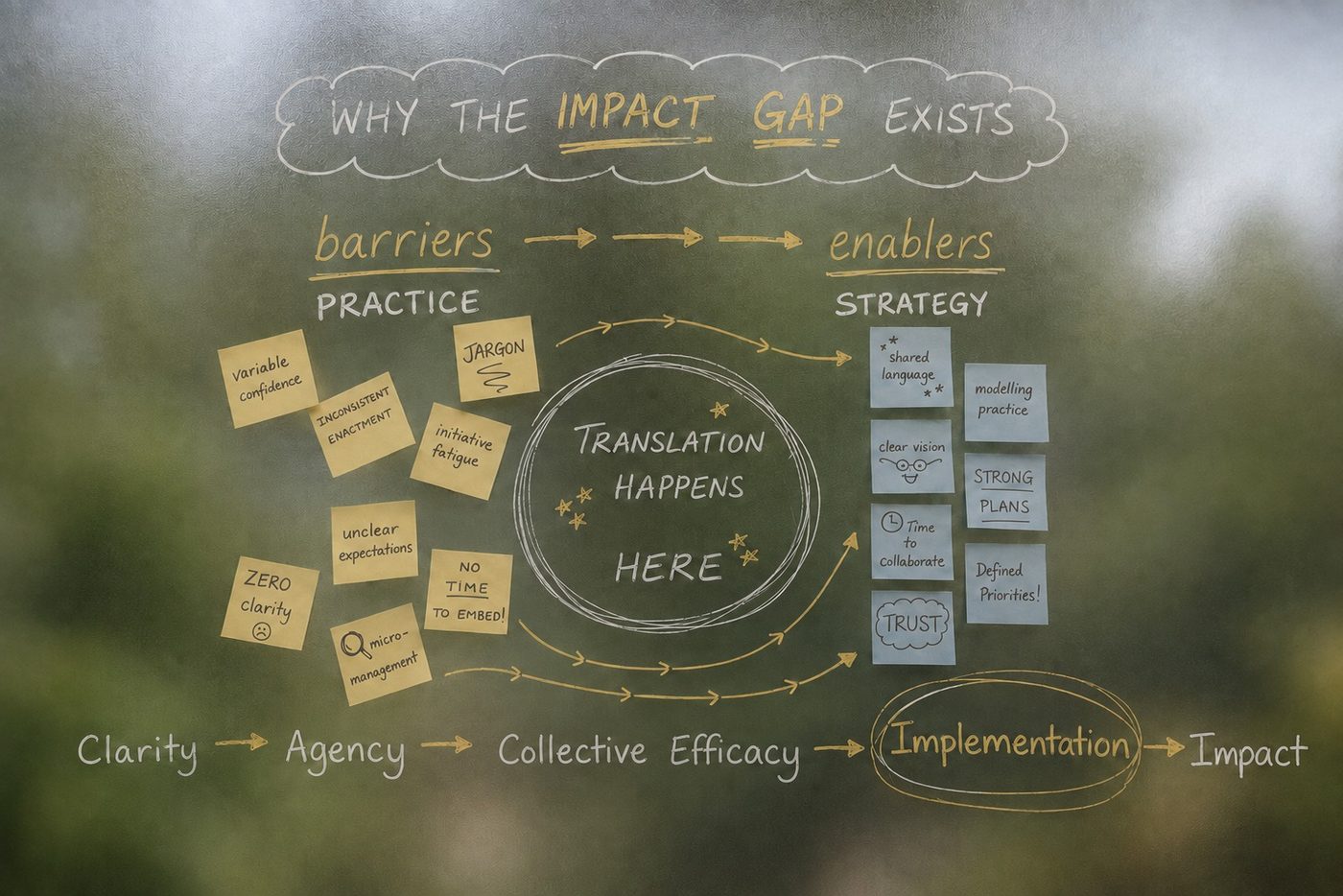
Thinking in progress — why the Impact Gap™ exists.
From Recognition to Understanding
Every framework begins with a question.
Not a solution.
Not a programme.
Not a model created for the sake of having a model.
A question.
Why do capable people, working with genuine commitment, experience improvement so differently across organisations?
Why does shared agreement in one room become fragmented meaning across a wider school?
Why do some strategies generate collective momentum while others remain dependent on individual effort?
Why do organisations with similar plans, structures and resources develop profoundly different cultures of improvement?
These frameworks emerged through sustained leadership practice, professional inquiry, engagement with research and careful attention to the organisational conditions that shape everyday experience. They are not intended to tell leaders what to think.
They are designed to help leaders think more deeply.
The Frameworks
Six frameworks.
Six perspectives on organisational life.
Each offers a different point of entry. Together, they reveal conditions and relationships that are more difficult to see in isolation.
Framework 01
Relational Efficacy™
This framework helps educational leaders recognise the conditions through which individual capability becomes shared belief, coordinated agency and meaningful collective action.
Highly capable organisations do not automatically become collectively effective. Relational Efficacy™ explores how trust, influence, relationships and professional belief interact to determine whether people simply work alongside one another—or genuinely improve together.
It provides a way of understanding how relationships shape the transition from individual capability to collective efficacy, revealing the conditions through which people come to believe, contribute and create meaningful impact together.
Explore Relational Efficacy™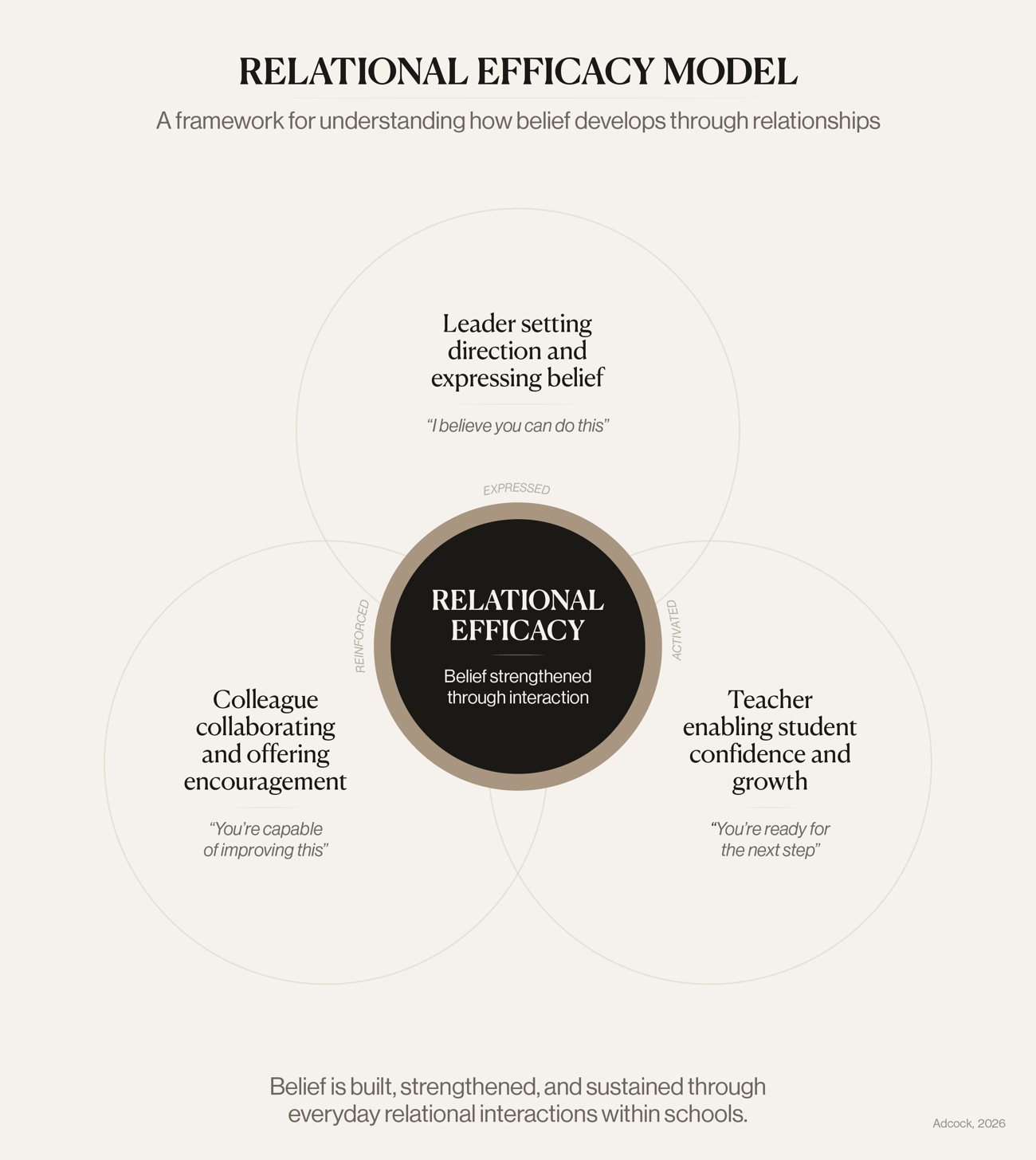
Framework 02
The Impact Gap™
This framework helps educational leaders recognise the often unseen distance between leadership intention and organisational experience.
Strategies may be thoughtfully designed. Meetings may feel productive. Messages may appear clear. Yet organisational experience does not always reflect leadership intention.
The Impact Gap™ provides language for understanding where intention and organisational experience begin to diverge, helping leaders recognise what may be changing, weakening or disappearing as improvement moves through the organisation.
Explore The Impact Gap™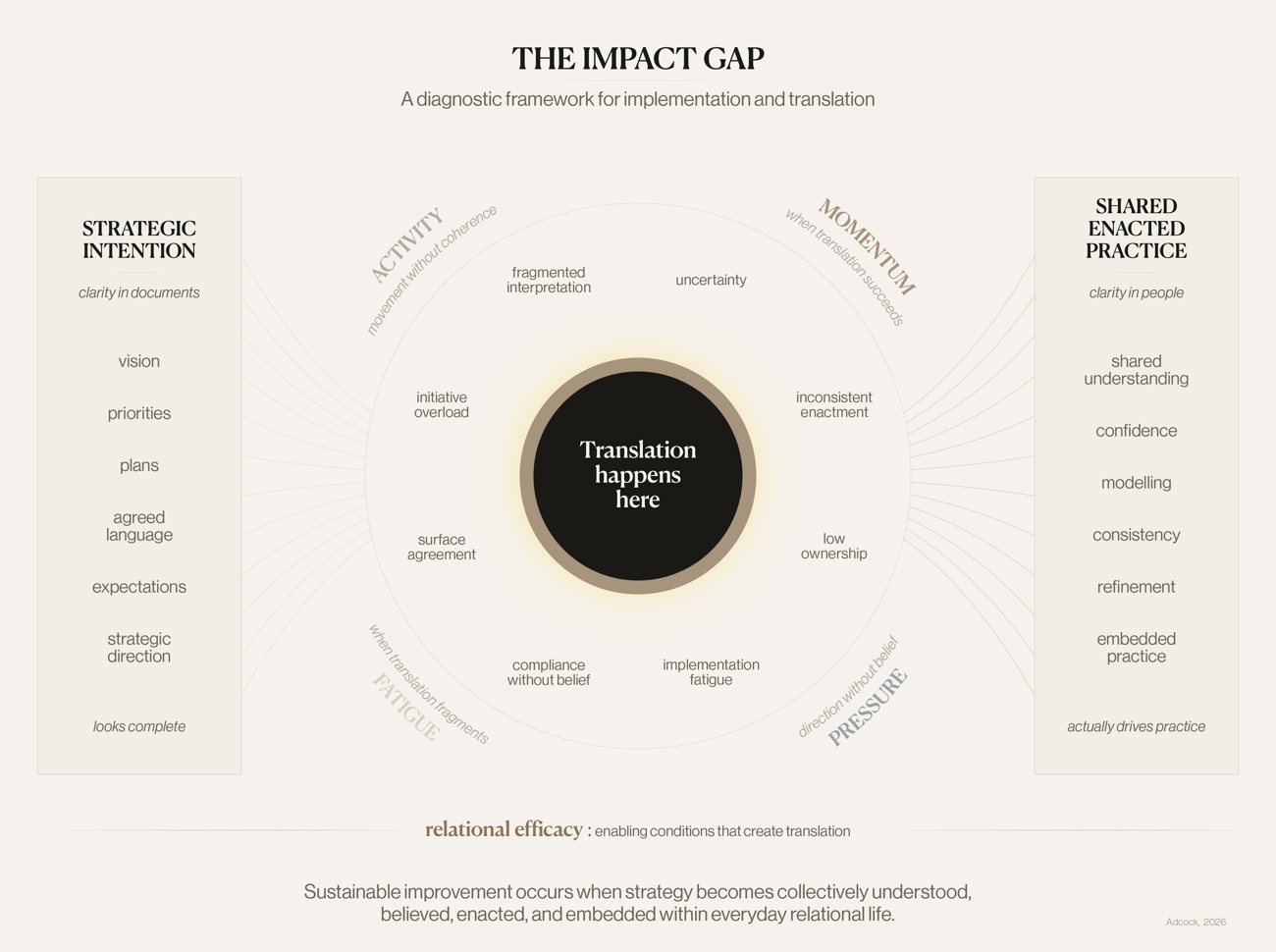
Framework 03
Direction × Belief Culture Map™
This framework helps educational leaders recognise the relationship between shared direction and collective belief.
Direction creates clarity. Belief creates momentum. Neither is sufficient on its own.
The Direction × Belief Culture Map™ provides a way of understanding how these conditions interact—and why organisations pursuing similar strategies can experience profoundly different levels of ownership, coherence and sustained improvement.
Explore the Direction × Belief Culture Map™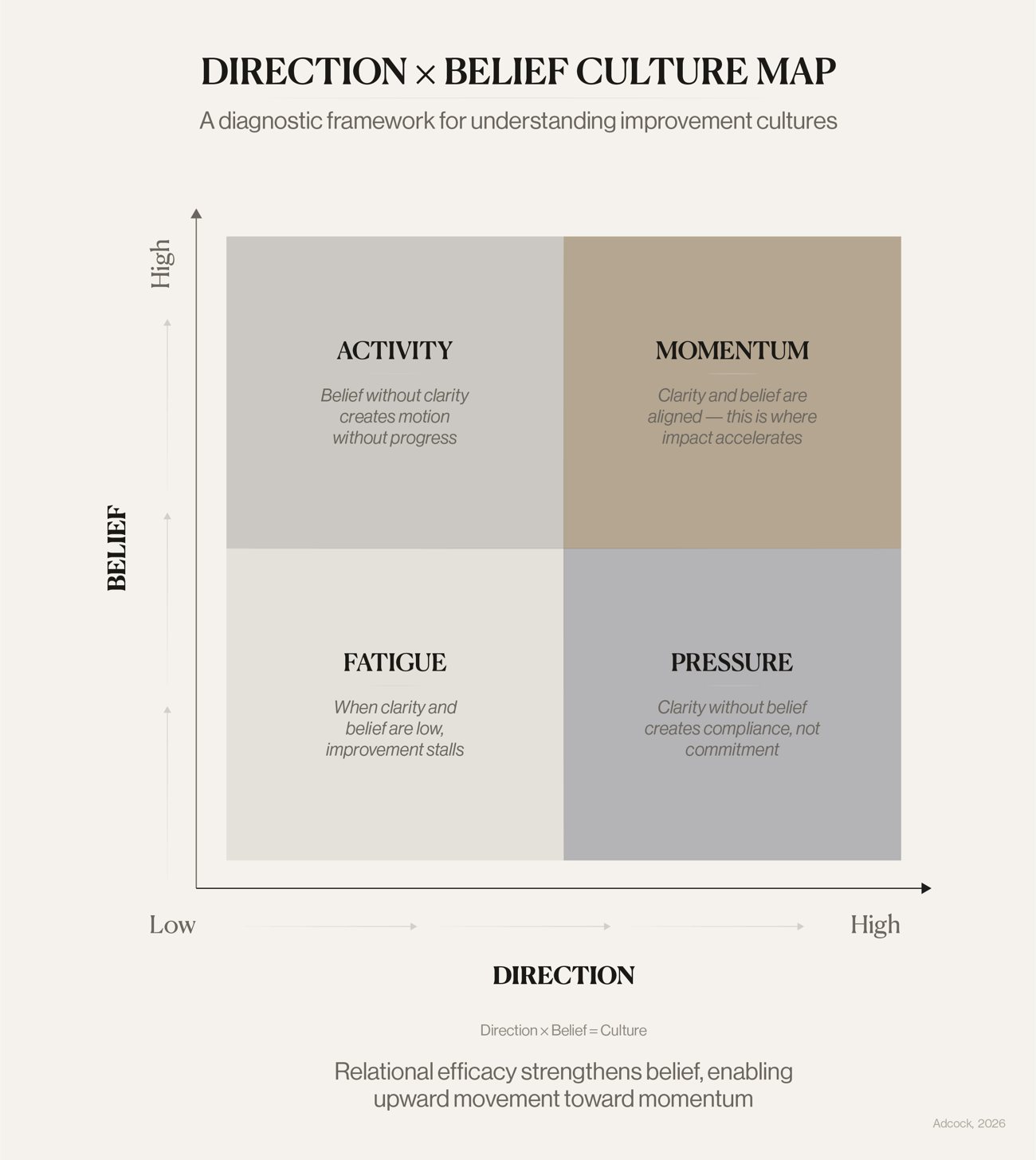
Framework 04
The Belief Cascade™
This framework helps educational leaders recognise how meaning changes as it moves through an organisation.
Leadership messages are never transferred unchanged. They are interpreted through relationships, role, experience, confidence and context.
The Belief Cascade™ reveals how meaning is strengthened, reshaped or quietly lost as it travels through an organisation, helping leaders distinguish between communicating information and creating genuine shared understanding.
Explore The Belief Cascade™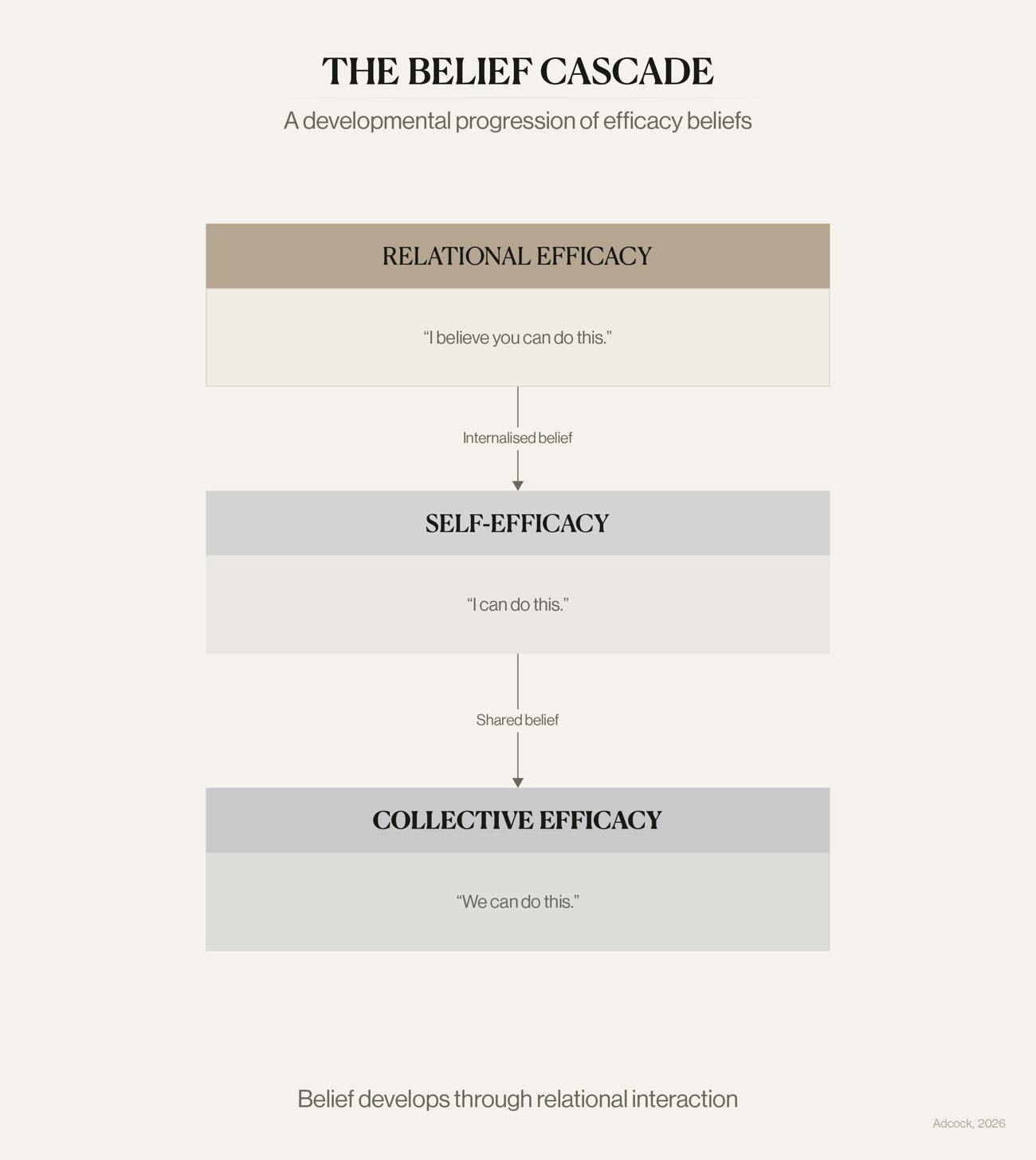
Framework 05
Inside-Out Impact Framework™
This framework helps educational leaders recognise the organisational conditions that create sustained impact.
Visible outcomes rarely begin where they become visible. They emerge from conditions that have been developing long before improvement becomes measurable.
The Inside-Out Impact Framework™ explores how direction, relationships, belief, agency and collective action interact to create meaningful organisational impact, helping leaders understand why sustained improvement is always built from the inside out.
Explore the Inside-Out Impact Framework™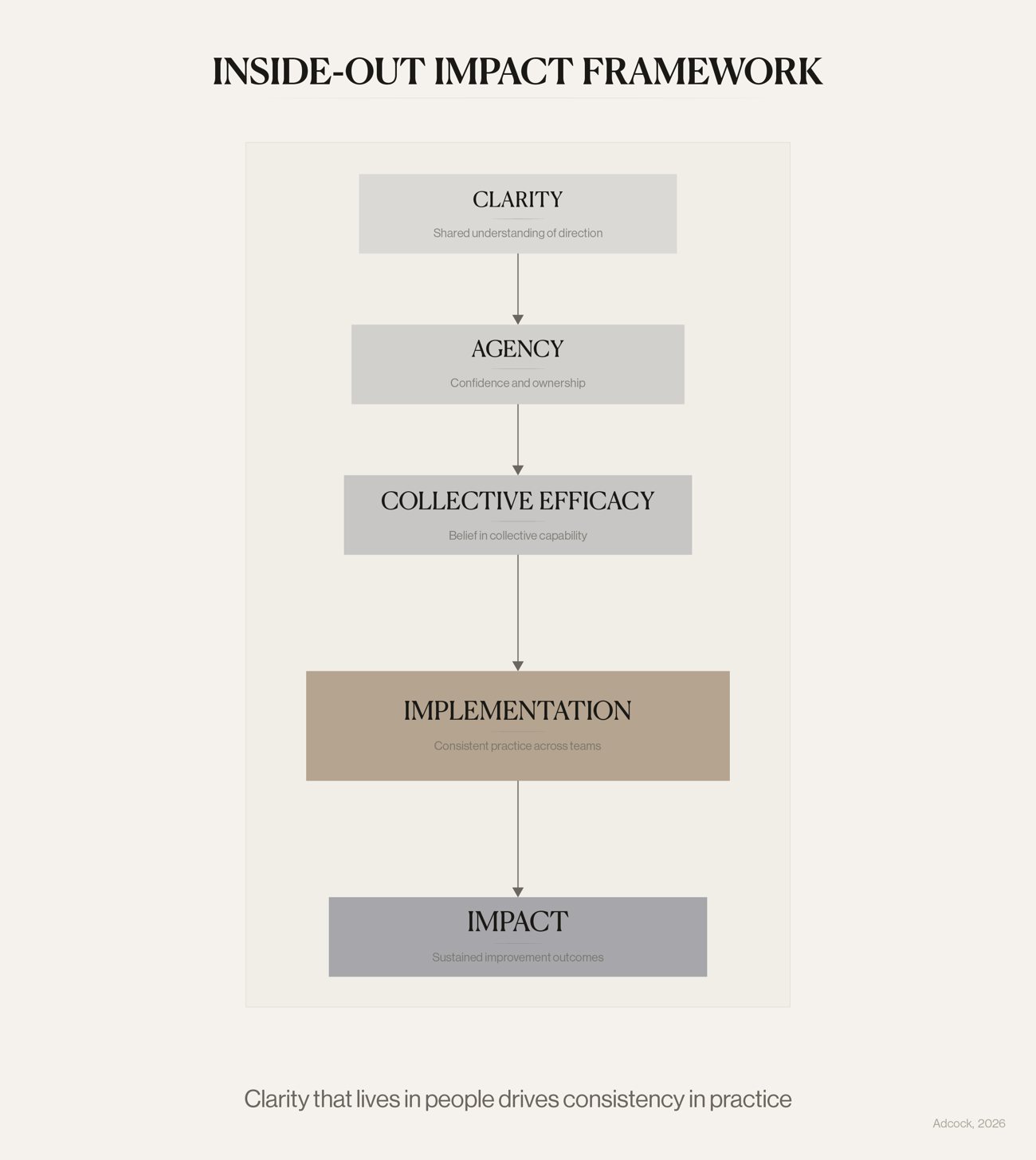
Framework 06
Theory of Improvement Cultures™
This framework helps educational leaders recognise the patterns organisations develop around improvement itself.
Two schools may pursue similar priorities with equally capable leaders and committed staff, yet experience profoundly different cultures of improvement.
The Theory of Improvement Cultures™ explores why this occurs, revealing how improvement cultures are continually shaped through the way improvement is understood, experienced and interpreted across the organisation.
Explore the Theory of Improvement Cultures™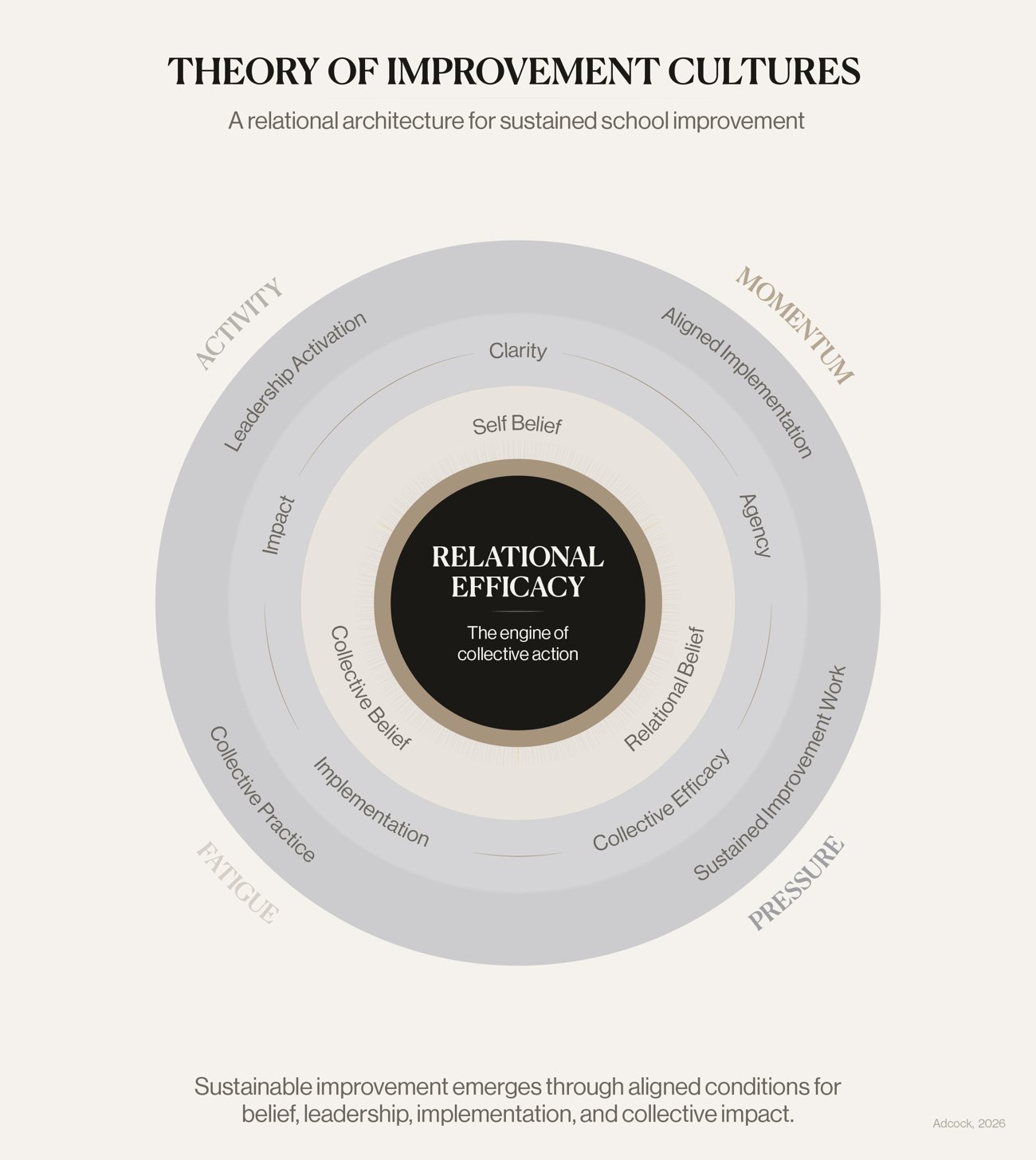
“Relational Efficacy makes an important contribution to how we think about creating the conditions in which people, teams and organisations can grow and thrive.”
Tania Lattanzio
Director, Innovative Global Education | Author & International Education Consultant
One Philosophy. Many Perspectives.
Each framework explores a different aspect of organisational life. No single framework explains an organisation. Nor is any one intended to.
Their value lies in the way they work together — providing educational leaders with a richer, more connected understanding of organisational life, revealing relationships, conditions and patterns that are rarely visible when viewed in isolation.
Relational Efficacy™
explores how people come to believe and act together.
The Impact Gap™
explores the distance between intention and experience.
Direction × Belief Culture Map™
explores the relationship between clarity and collective belief.
The Belief Cascade™
explores how meaning moves through an organisation.
Inside-Out Impact Framework™
explores the conditions beneath sustained impact.
Theory of Improvement Cultures™
explores the organisational patterns that emerge around improvement itself.
What Might Become Visible?
Perhaps the greatest opportunities for improvement have been present all along.
Waiting to be recognised.
That is the purpose of these frameworks. Not to provide faster answers.
To help educational leaders ask wiser questions.
Perhaps the challenge is not resistance.
Perhaps it is interpretation.
Perhaps the organisation has direction…
but not yet shared belief.
Perhaps implementation is not creating the problem.
Perhaps it is revealing one.
Applied Architecture
From Understanding to Improvement
Recognition is not the end of the work.
It is where more intentional improvement can begin.
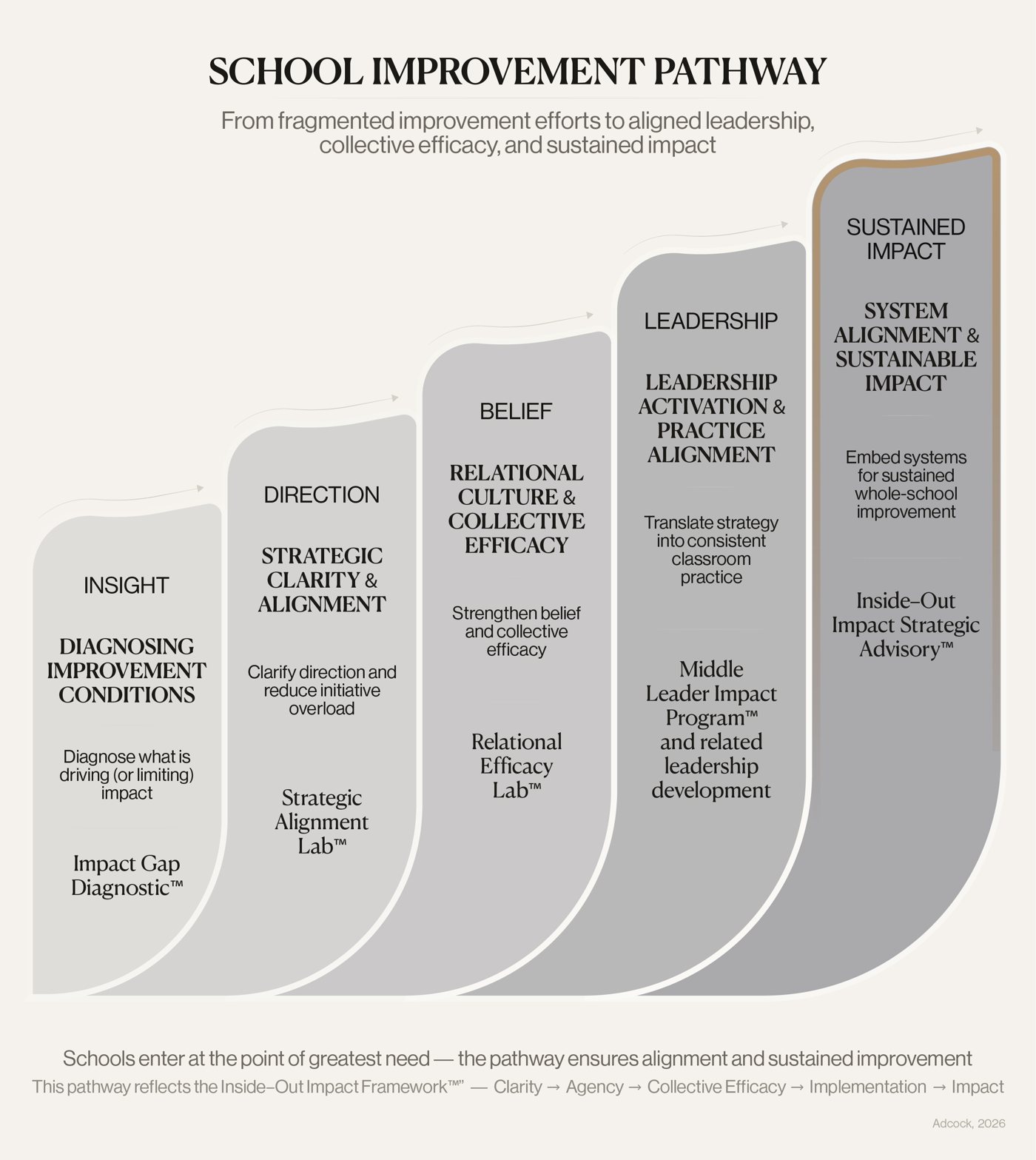
The frameworks of Elevate Impact Advisory help leaders see organisational conditions more clearly. The School Improvement Pathway™ connects that understanding to improvement—bringing insight, direction, belief, leadership and sustained impact into one coherent architecture.
The Pathway is not a prescribed sequence every organisation must follow. Schools enter at the point of greatest need.
Continue Exploring
Every framework is one entry point into a larger body of work. Some leaders begin with a framework. Others first recognise themselves in a Story from Practice, seek evidence through a diagnostic, or begin in partnership. Each offers a different way of understanding organisations more deeply.
See the thinking in organisational life.
Explore original perspectives on leadership, culture and improvement.
Explore the research, ideas and thinking around the work.
Make organisational conditions more visible.
Explore how the work might support your organisation.
Wondering what this might reveal in your organisation?
Begin the ConversationA Note on the Work · Research in Conversation
The frameworks of Elevate Impact Advisory sit in conversation with established thinking across educational leadership, organisational learning, implementation science, collective efficacy, relational trust, organisational culture and sensemaking.
They do not claim to replace that work. Nor are they simple restatements of it. They represent an ongoing conversation between research, professional observation and sustained inquiry, bringing these perspectives together to better understand the organisational conditions shaping everyday educational life.
Some propositions are grounded in well-established evidence. Others represent original EIA synthesis and conceptual development. All are offered as invitations to think more deeply about organisations. Not simply to agree with them.